Can You Use ChatGPT for Homework? What Students Need to Know
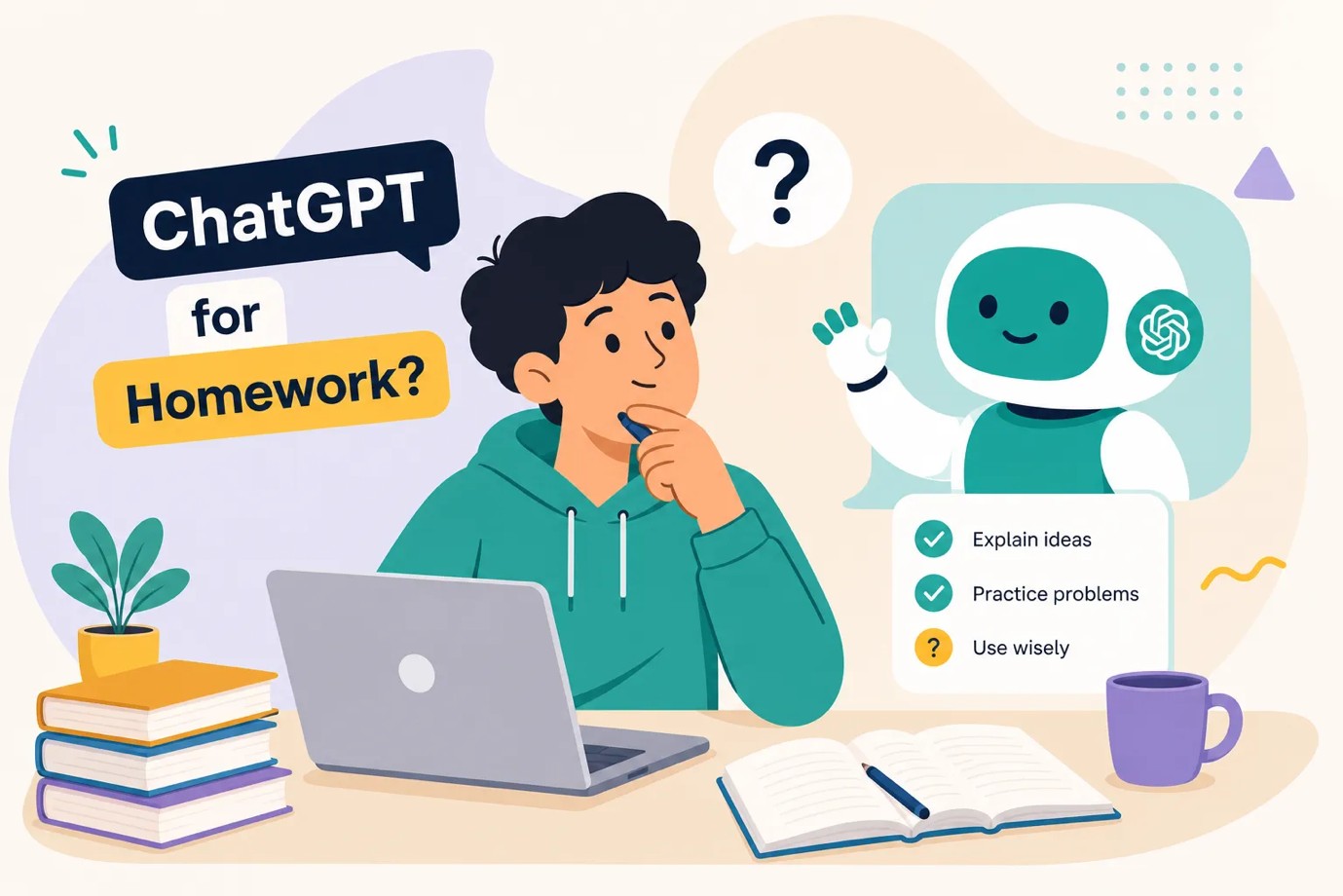
ChatGPT is fast, free, and available at 2 a.m., but there is a real difference between leaning on it as a study aid and handing in its output as graded work. That difference is where students get flagged, penalized, and reported.
This guide covers what ChatGPT genuinely does well, where it consistently fails, how AI detection tools like Turnitin actually work, and when a high-stakes assignment calls for a human expert instead of an AI gamble.
Millions of students are already using ChatGPT for homework, and the appeal is obvious. It's free, it never sleeps, and it doesn't judge you for asking the same question three times at 2 a.m. But there's a significant gap between using ChatGPT as a homework aid and submitting its output as your own graded work, and that gap is exactly where students get into serious trouble.
The risk isn't hypothetical anymore. Turnitin detects unmodified ChatGPT text at rates of 98, 100%, and it integrates directly into Blackboard, Canvas, and Moodle, the same platforms most US institutions use every day. A flagged submission can mean a zero on the assignment, a formal academic misconduct charge, or disciplinary proceedings. Some students have already decided the gamble isn't worth it and are working with human-expert services like EasyAssignments, which deliver PhD-written, AI-detection-free work backed by a grade guarantee. This article walks through what ChatGPT genuinely does well, where it consistently fails, and what you should do differently based on the stakes.
ChatGPT for Homework: What It Helps With
When you're staring at a blank document with a deadline three hours away, ChatGPT is genuinely useful for getting unstuck. It can generate essay outlines, suggest thesis angles, and help you organize scattered ideas into a logical structure. Using it this way, as a brainstorming partner and AI homework helper, is legitimate academic support, not a policy violation, provided your course policy allows it. Always check your syllabus or ask your instructor before assuming any AI use is permitted.
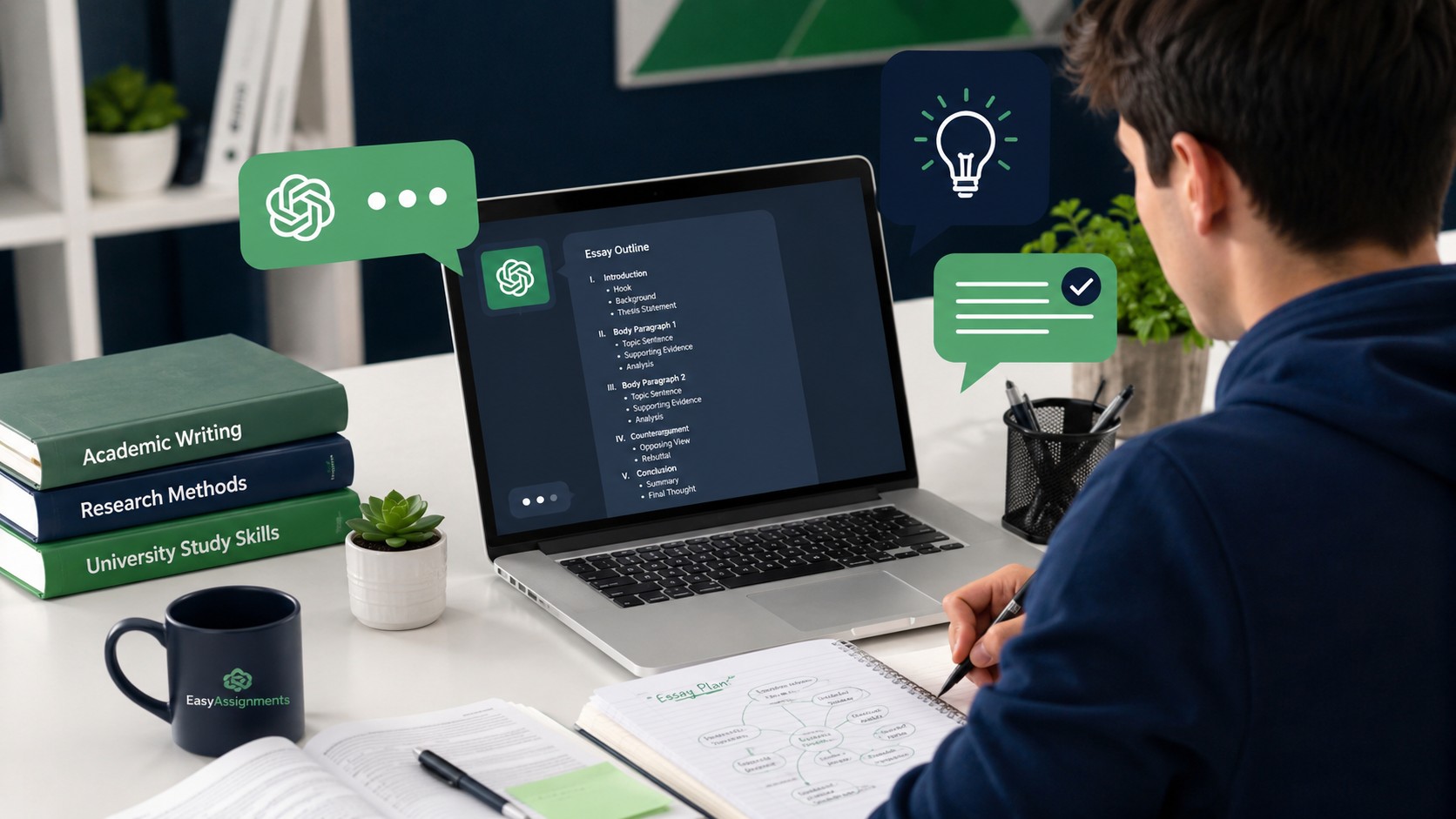
For concept mastery, ChatGPT functions like a patient tutor who never tires of your questions. Ask it to explain supply elasticity, the causes of the French Revolution, or how photosynthesis works, and it will simplify the material, use analogies, and adjust to your follow-up questions. For international students navigating American academic standards, or any student who finds office hours intimidating, this kind of AI tutoring for students provides genuinely valuable low-pressure explanation.
Paste a draft you've already written into ChatGPT and ask it to flag weak sentences, awkward transitions, or structural problems, and it performs well on that task too. This is different from asking it to write the draft. You retain authorship, you improve your own work, and you're using the tool the way most academic integrity policies actually permit. Think of it as ChatGPT homework help for revision, not replacement.
Where ChatGPT Consistently Gets Homework Wrong
Math and Calculation Limitations
The failure modes are real, and they're well-documented. In mathematics, ChatGPT treats calculation like a language task rather than an arithmetic one. One analysis of GPT-4 Turbo performance on procedural math found it failed to accurately solve 80% of problems without iterative correction; even with multiple correction cycles, the error rate stayed around 50%. If your homework involves algebra, statistics, or chemistry problem sets, ChatGPT is not a reliable standalone solver.
Hallucinated Citations and Fabricated Sources
The hallucination problem is more dangerous than most students realize. When ChatGPT generates citations, it fabricates them with convincing-looking formatting, real journal names, plausible author names, realistic volume numbers, none of which may actually exist. Research examining AI-generated academic abstracts found that roughly 32% fooled professional reviewers, not because the content was accurate, but because it looked accurate. A hallucinated source in a research paper isn't a minor formatting issue; it's an academic integrity problem that puts your grade and your academic record at risk.
Critical Thinking and Original Argumentation
For assignments requiring critical thinking, original argumentation, or evidence-based analysis, ChatGPT consistently produces work that reviewers describe as competent but not excellent. Professors who grade at a high standard notice the generic structure, the absence of original insight, and the uniformly polished tone. The output passes a surface-level check but falls short where it counts most.
The AI Detection Risk Most Students Underestimate
Turnitin doesn't just scan for copied text. It analyzes two specific patterns: perplexity (how predictable the word choices are) and burstiness (how uniform the sentence lengths are). AI-generated text scores low on both. It's too consistent, too polished, and too even, and detection tools like Turnitin, GPTZero, and Originality.ai are specifically trained to recognize that signature.
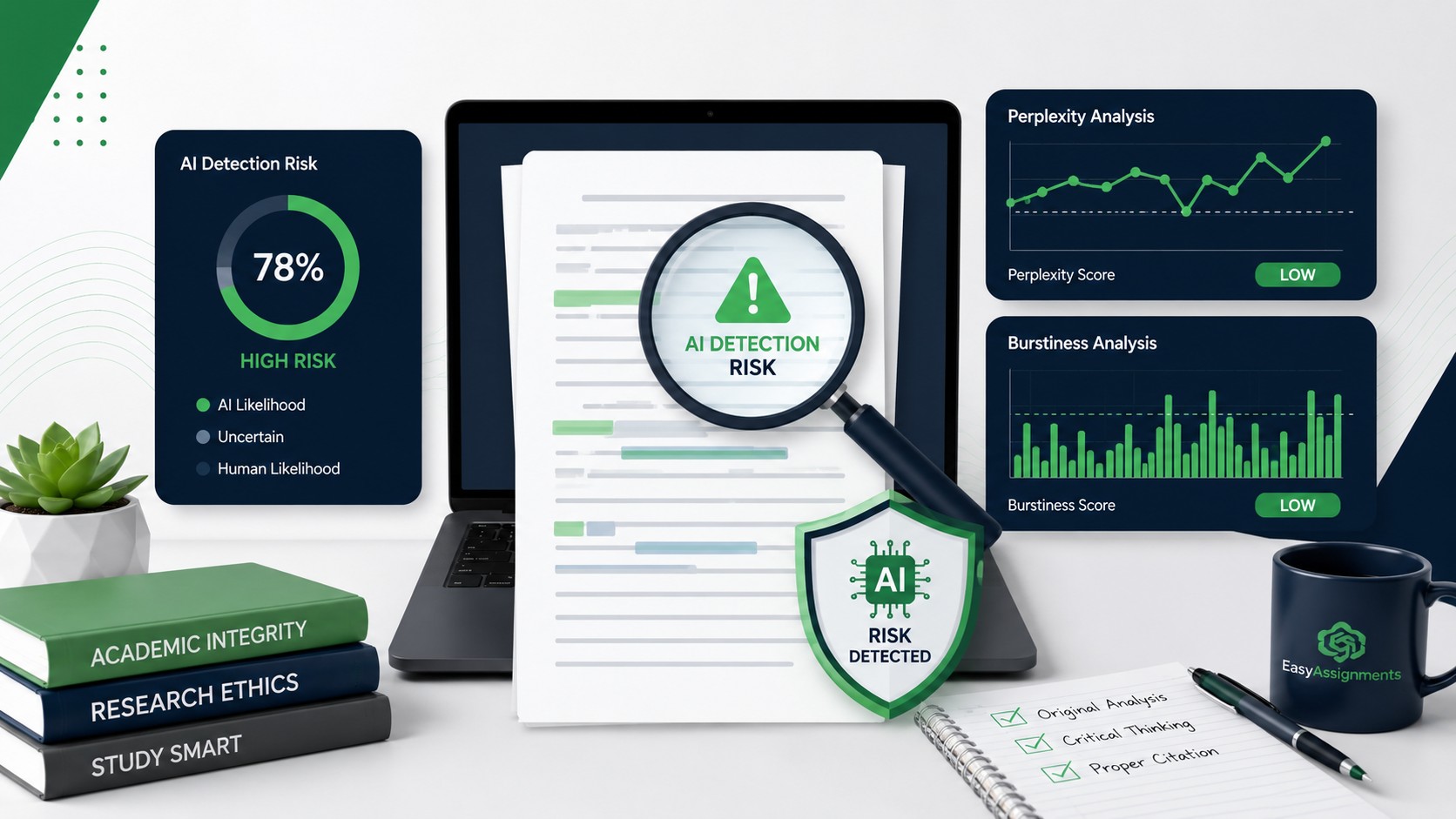
The detection numbers are not on your side. According to Turnitin's published claims, the tool reaches approximately 98% accuracy on documents with more than 20% AI content, with less than 1% false positives on curated samples. For raw, unmodified ChatGPT output, independent analyses put detection rates at 98, 100%. The score threshold that triggers instructor review typically starts at 20%; anything above 50% is generally treated as a strong indicator of AI use, with most instructors requesting drafts, process notes, or an in-person conversation to verify the work is yours.
The policy landscape in 2026 makes the risk even higher. Only about 20% of US universities have formal written AI policies for graded assignments, which means most institutions default to course-level rules set by individual instructors. The working default at most US institutions is prohibition unless the instructor explicitly authorizes AI use, and unauthorized use is classified under scholastic dishonesty in the same category as plagiarism. Consequences range from a zero on the assignment to academic probation to, in serious cases, expulsion.
How to Use ChatGPT for Learning Without Crossing the Line
The most responsible approach keeps ChatGPT in a tutoring role, not a ghostwriting role. The PACE framework structures your prompts around learning: Purpose (what you want to accomplish), Action (what the AI should do), Context (the topic or your existing notes), and Explain (the format you want back). A prompt built this way produces a very different outcome than simply asking for an essay on a topic.
A practical example: "Act as a diagnostic tutor. Quiz me on [topic] with three questions of increasing difficulty. Wait for my answers before giving feedback." This forces active recall on your part and keeps the AI from dumping an answer you'd be tempted to copy. You can follow up with a request for performance feedback after you've answered, which gives you genuinely useful study data without generating any submittable content.
If your instructor permits AI use, citation is not optional. You need the model name, the date of the query, the specific prompt you used, the company name (OpenAI), and the URL. Some institutions cap AI contribution at 25% of any submission and require you to identify the specific sections where AI was used. Check your syllabus and ask your professor before you assume permission exists. When in doubt, write it yourself, or get human expert help.
Every fact, statistic, and citation that any AI homework assistant produces needs manual verification against your textbook, a peer-reviewed source, or your professor's materials before you include it in any graded work. This step isn't optional. A hallucinated citation that makes it into your paper is your responsibility once you submit it, add one corroborating check and you've protected yourself entirely.
When the Stakes Are Too High for an AI Gamble
The risk calculation changes when an assignment carries significant weight in your final grade. A failed 30%-weighted paper doesn't just lower one score, it can pull your course grade below passing. For working adult students, international students on academic standing requirements, or anyone depending on financial aid to continue, that outcome is rarely recoverable. That context matters when you're deciding how to approach a high-stakes submission.
This is where EasyAssignments offers something fundamentally different from using ChatGPT for homework. Every assignment is written from scratch by verified PhD-level subject experts across 75+ academic disciplines. There's no AI generation, no outsourcing, and no shortcuts involved in the process. A Turnitin report comes included with every order, confirming the work is plagiarism-free and AI-detection-free. There's no perplexity score to explain, no fabricated citations to clean up, and no burstiness issue that flags the submission, just human writing from a credentialed expert in your specific subject area.
For students who need a passing grade to maintain their academic standing, EasyAssignments backs every order with a B-or-better guarantee and a full refund policy if that standard isn't met, with unlimited free revisions included. For students at WGU, Capella, UMGC, or any US institution where a failing grade carries serious downstream consequences, financial aid eligibility, program requirements, graduation timelines, that guarantee changes the risk profile entirely compared to submitting AI-generated work and hoping the detection tools miss it.
Use the Right Tool for the Right Situation
ChatGPT is a legitimate and useful study tool when you use it correctly: as a brainstorming partner, a concept explainer, a grammar reviewer, and a structured homework AI assistant built around active recall. Those use cases are genuinely valuable, and most academic integrity policies have room for them when you're transparent with your instructor about how you're working.
Submitting AI-generated text as your own graded work is a different category of decision. In 2026, the tools instructors use to detect it are more accurate and more deeply integrated into everyday grading workflows than most students realize. The smarter move is to understand where using ChatGPT for homework genuinely helps, verify everything it produces, and recognize when a high-stakes assignment requires something more reliable. When you can't afford a flagged submission or a grade that falls below passing, EasyAssignments provides the human-expert alternative: PhD-written work, delivered on time, with a grade guarantee and a Turnitin report to prove it. Matching the right tool to the right situation is how your academic record stays intact.
Don't Gamble Your Grade on AI Detection
When an assignment carries real weight, choose the human-expert alternative: PhD-written, plagiarism-free, AI-detection-free work with a Turnitin report and a grade guarantee.