AI Writing Tools for Students: What You Need to Know in 2026
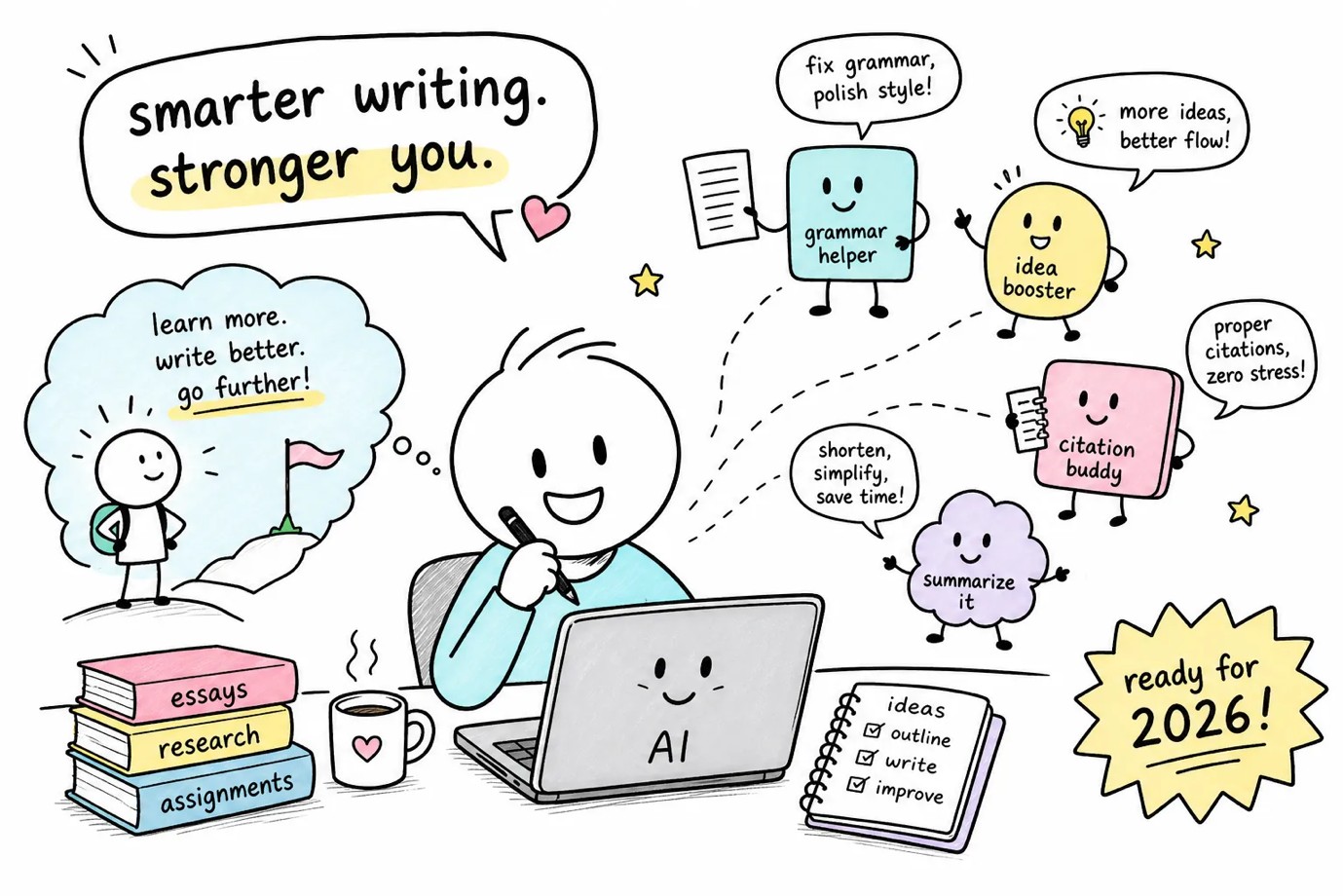
AI writing tools are now as common in student life as a highlighter, and the best of them genuinely work. But there is a gap between what shows up on screen and what survives a professor's grade.
This guide walks through the leading tools, what each does well, where they quietly fail, and when a credentialed human expert is the smarter, safer choice for high-stakes work.
Students in 2026 are reaching for AI writing tools the way previous generations reached for a highlighter. These tools are everywhere, and the best of them genuinely work. But there's a gap between what an AI text generator produces on screen and what holds up when a professor grades it, and that gap is wider than most students expect. Understanding where these tools shine and where they quietly fail is the difference between using them smartly and using them recklessly. This article walks through what's actually out there, what each tool does well, where they fall short, and what the smartest students are choosing when their grade is actually on the line.
The AI writing tools students are actually using in 2026
The market for AI writing software has consolidated around a few clear leaders. Most students are working with a handful of tools, each suited to a different part of the writing process.
The general-purpose powerhouses: ChatGPT and Claude
ChatGPT Plus, running on GPT-4o at $20 per month, and Claude Pro at the same price point are the dominant AI writing tools for research-heavy assignments and long-form drafting. Claude specifically excels at following style instructions and producing natural-sounding prose. Its "Skills" feature lets users feed it writing samples so every output matches their personal voice. Both tools handle brainstorming, outlining, and first drafts better than nearly anything else on the market.
AI writing assistants built specifically for student and academic work
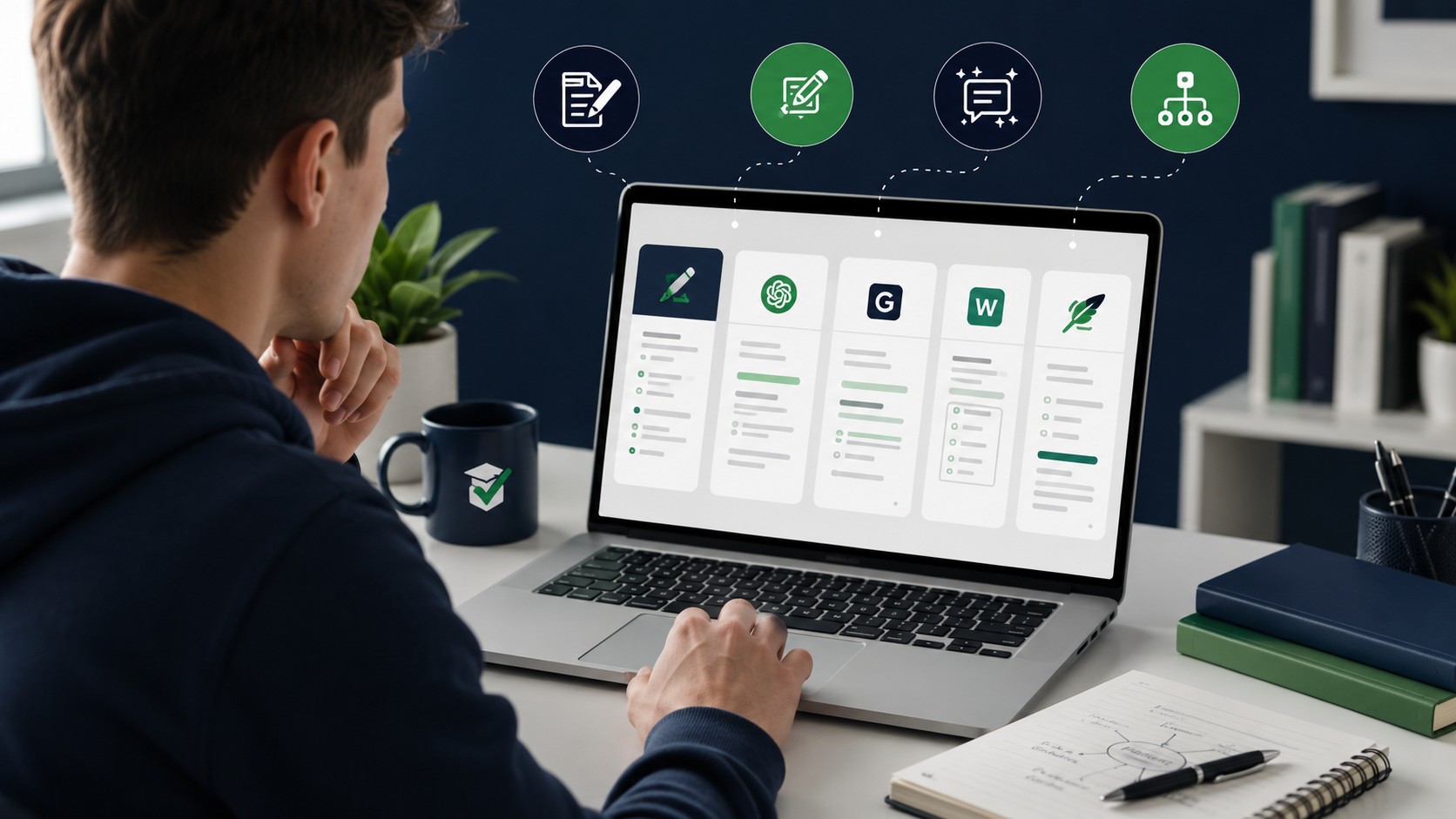
Grammarly remains the go-to AI writing software for editing and clarity, with a free tier that covers basic grammar corrections and a paid plan starting at $7 per month for advanced rewrites. Paperpal is designed specifically for academic formatting and journal submission checking. ParagraphAI, which has ranked highly in several independent comparative reviews of student-focused tools, starts at $12 per month and handles routine assignments, brainstorming, and outlining well. These AI content generators are built with student workflows in mind, unlike enterprise-focused tools such as Jasper, which is priced at $59 to $69 per month and built for marketing teams.
Creative and voice-first options worth knowing
Sudowrite ($19 per month) is a strong option for fiction and creative writing, producing output that some reviewers describe as more emotionally resonant and vivid than what ChatGPT generates. EVY ($19 per month) takes a different approach, using voice input to generate structured drafts in a brand voice and running system-wide on macOS. Both are worth knowing about, but neither is built for academic coursework.
What these AI writing assistants actually do well
Dismissing these tools entirely is a mistake. Students use them because they solve real problems, and those problems deserve honest acknowledgment before getting into the limitations.
Speed, structure, and overcoming the blank page
AI writing tools are genuinely fast. For outlining a paper, restructuring scattered research notes, or producing a first draft on a familiar topic, tools like ChatGPT and ParagraphAI save hours. Students juggling multiple courses and tight deadlines benefit the most from this, especially during the early stages of any writing project.
Editing and clarity improvements
Grammarly remains the strongest AI writing software for polishing finished work. It catches grammar errors, flags tone issues, and scores readability in a way that's immediately actionable. Wordtune is a solid choice for beginners who need sentence-level suggestions without a steep learning curve. Both are genuinely useful for international students who are still building confidence in academic English, though neither replaces subject knowledge.
Brainstorming and research acceleration
Claude Pro's ability to process long documents and follow detailed style instructions makes it a strong research companion for building argument frameworks and identifying source angles. ChatGPT's structured output is equally useful for generating a working outline quickly. The challenge, as discussed next, is that the research itself requires significant verification before it can be trusted.
The limitations that catch students off guard
This is where the honest conversation starts. These limitations aren't edge cases, they're patterns that show up consistently across testing and published research.
Hallucinations and fabricated academic sources
Hallucination rates among leading generative AI writers in academic citation tasks are a documented concern. Studies examining GPT-4 and GPT-4o in citation-heavy tasks have found that combining fabricated references with errors in real ones can produce error rates well above 50% in some test conditions. That means for every ten sources an AI writing tool generates, two or more may be entirely made up or incorrect. For a literature review or research paper, this isn't a minor inconvenience, it's a failing grade built into the output by default.
Generic output that professors recognize immediately
Even when content is factually accurate, AI writing tools produce a flattened, formulaic prose style. Instructors who read dozens of student papers each semester are increasingly skilled at identifying AI-generated text by its structure and vocabulary patterns, often before running any detection tool. The problem isn't just detection; it's that the writing doesn't sound like a student who engaged with the material.
Subject depth and specialized knowledge gaps
AI writing software performs adequately on general topics but struggles with advanced coursework. Graduate-level assignments in nursing, law, engineering, or research methodology expose the limits of these tools quickly. No amount of prompt engineering compensates for a fundamental gap in domain expertise, and that gap becomes obvious in specialized subject areas.
The AI detection problem every student needs to understand
AI detection has moved from an experiment to a standard institutional practice at most US universities. Understanding how it works isn't optional anymore.
How Turnitin and AI detectors flag student work
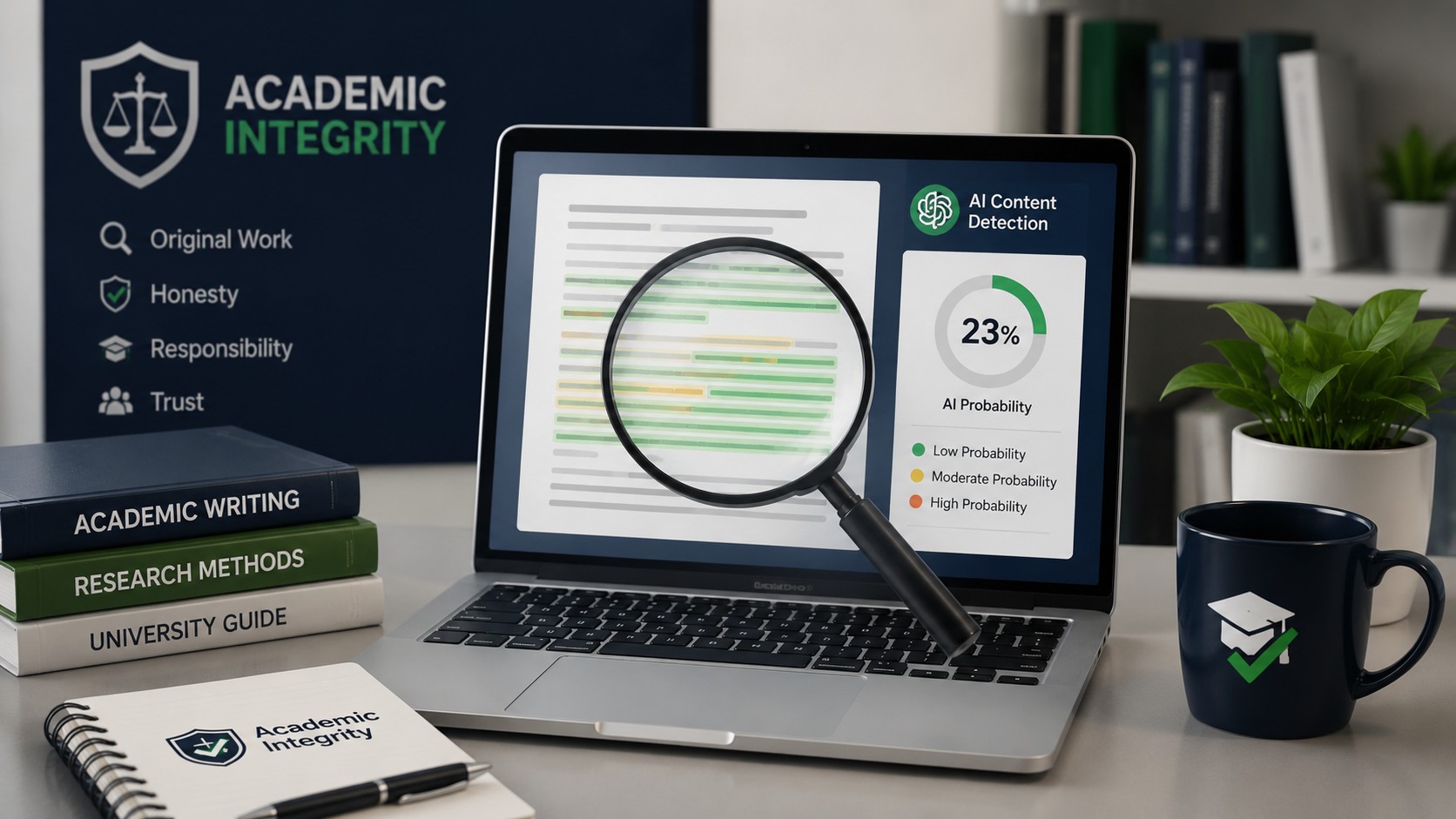
Turnitin's AI detection tool scans for statistical patterns in sentence structure and word choice that correlate with AI-generated output. According to Turnitin's own documentation, the tool is calibrated to flag text with a high probability of AI generation, and raw, unedited output from ChatGPT or Claude consistently scores at the high end of that scale. Even paid "humanizer" features built into some AI writing tools don't guarantee a clean result against Turnitin's updated 2026 algorithms.
What universities are doing with the data
Major US institutions including Cornell, Duke, Columbia, Caltech, and CUNY have explicitly updated their academic integrity policies to classify unauthorized AI-generated submissions as academic misconduct. The consequences range from a failing grade on the assignment to suspension or expulsion, depending on the school and whether it's a repeat offense. Students who assume their institution isn't running detection tools are taking a bet with their academic record.
Why "low AI score" claims from tools aren't reliable
Some AI writing tools advertise detection-resistant output, but available testing suggests these claims don't hold up consistently under Turnitin's current algorithms. What passes one scan may fail the next version of the detector. There's no guaranteed workaround built into any of these tools, and trusting marketing copy over independent test results is a risk most students can't afford to take.
Free plans vs. paid tiers: what students actually get
Budget is a real consideration, and the free tiers aren't useless. But they have hard limits worth knowing before you rely on them for a full semester.
The real limits of free AI writing tool tiers
Most free plans cap output at 2,000 to 10,000 words per month with restricted templates, no team features, and limited revision history. Grammarly's free tier handles basic grammar. ChatGPT's free tier includes GPT-4o with usage limits. ParagraphAI allows five uses per day at no cost. These limits work fine for occasional drafting help but fall short for a steady stream of coursework across multiple classes.
What paid tiers ($12 to $20 per month) actually unlock
Paid plans in this range unlock unlimited output, advanced tone settings, and better model access. ChatGPT Plus and Claude Pro both sit at $20 per month and offer the strongest academic writing support at this price point. For most students, the real question isn't which AI writing tool to pay for, it's whether paying for any of them actually solves the detection and quality problem. Based on the evidence, for high-stakes assignments, it doesn't.
When a human expert is the smarter, safer choice
The strengths of AI writing tools are real, but so are the compounding risks. For certain assignments, the calculus shifts decisively toward human expertise.
The assignments where AI writing tools consistently fall short
Graduate-level research papers, clinical case studies, business strategy reports, and capstone projects require subject-matter expertise that no AI content generator reliably provides. These assignments also require verified citations, nuanced argumentation, and precise institutional formatting. The risk of submitting AI-generated output for work at this level isn't worth taking when the consequences of getting it wrong include failing a course or losing a scholarship.
What human-written, expert-verified work actually delivers
This is where a service like EasyAssignments offers a different kind of solution. With 2,000+ verified PhD-level writers covering 75+ subjects, every assignment is written from scratch by a credentialed human expert, not generated by an AI writing tool. Every completed order includes a Turnitin report confirming zero plagiarism and no AI detection flags. The B-or-better grade guarantee, backed by a full refund policy, means the quality commitment comes with real accountability. That's a fundamentally different value proposition than any AI writing software currently on the market.
Making the call based on what's actually at stake
For brainstorming, grammar checks, and early drafts on lower-stakes work, AI writing assistants serve a real purpose. But for assignments that carry real weight, final papers, program assessments, cumulative projects, anything tied to program progression, the gap between AI-generated output and expert human writing is often the gap between a passing and a failing grade. Every student needs to make that calculation honestly, based on what they actually stand to lose.
The bottom line on AI writing tools in 2026
AI writing tools in 2026 are practically useful for specific, lower-stakes tasks. They help with speed, structure, and editing. ParagraphAI handles routine assignments reliably. Grammarly is the most capable polishing tool in this category. ChatGPT and Claude are strong for outlining and brainstorming. But the limitations are real: hallucination rates for academic citations are a documented problem, output quality is often recognizable to experienced instructors, and Turnitin detection for unedited AI output remains a consistent institutional risk.
For students whose assignments carry real consequences, human-written support from a verified expert is the more reliable answer. EasyAssignments provides exactly that: credentialed writers, Turnitin-clean work, and a grade guarantee that no AI writing software can match. When your grade actually matters, that's the standard worth holding yourself to.
Visit EasyAssignments to work directly with a credentialed subject-matter expert on your next assignment.
When your grade actually matters, hold a higher standard
Skip the detection risk and citation errors. Work with a verified PhD-level writer on your next assignment, backed by a Turnitin-clean report and a B-or-better grade guarantee.