
Thinking "Take My Online Course for Me"? Here Is How It Really Works
If you have typed "take my online course for me" into a search bar at 2 a.m., you are not lazy and you are not alone. You are usually a working adult, a parent, or a student juggling too many deadlines at once, looking for a way to keep your grades from slipping while life happens.
This guide breaks down what online class help actually involves, what results are realistic, the risks you should weigh, and how to choose support that keeps you in control of your learning. The goal is not shortcuts that hurt you later, it is a smarter way to stay on track.
What People Really Mean When They Say "Take My Online Course for Me"
The phrase "take my online course for me" covers a much wider range of needs than it first appears. For some students it means help with one impossible module in an otherwise manageable term. For others it means ongoing support across a full semester of quizzes, discussion posts, and assignments while they work full time. Rarely does it mean someone wants to learn nothing at all. Most people who search this are trying to protect a GPA, keep a scholarship, or simply survive a stretch where every hour is already spoken for.
Online learning was sold as flexibility, and it is flexible in theory. In practice, self paced courses often demand more discipline than traditional classes, not less. There is no fixed lecture time to anchor your week, no classmate sitting next to you to compare notes, and no professor noticing when you drift. Deadlines pile up quietly until a single busy week turns into three missed assignments. When that happens, looking for help is a reasonable response, not a character flaw.
Understanding your own situation clearly is the first step. Are you stuck on the whole course or one piece of it? Is the problem the subject matter, the time, or the format of the platform itself? The honest answer changes what kind of help will actually serve you, and it is worth pausing on before you spend a single dollar.
Common Reasons Students Look for Online Course Help
People arrive at this decision from very different directions. Naming the real reason matters, because it points you toward the right kind of support rather than a generic fix.
- Time pressure: Full time work, caregiving, or multiple courses at once leave almost no margin for a demanding online class.
- Subject difficulty: A required course far outside your strengths, such as statistics for a humanities major or advanced writing for a technical student.
- Platform confusion: Some learning management systems are clunky, and figuring out where to submit work eats time that should go to the work itself.
- Health and life events: Illness, family emergencies, or mental health struggles that make a normal course load temporarily impossible.
- Prerequisite courses: A general education requirement that stands between you and the degree you actually care about.
- Fear of failing: A single low grade that could cost financial aid, delay graduation, or damage a competitive GPA.
Each of these has a different ideal answer. Time pressure might be solved by tutoring plus better planning. Subject difficulty might call for a specialist who can explain concepts until they click. Recognizing which bucket you fall into keeps you from paying for the wrong thing.
Worth remembering: The best outcome is not just a passing grade this term, it is walking away understanding enough of the material that the next course does not feel like the same trap. Support that teaches, rather than only submits, pays off far longer.

How Online Course Help Actually Works
Legitimate online class support is less mysterious than the marketing makes it sound. When done responsibly, it usually follows a clear sequence, and knowing that sequence helps you spot services that cut corners.
Step one: assessment and scope
A good provider starts by understanding your course. That means the syllabus, the platform, the grading breakdown, the deadlines, and where exactly you are struggling. A serious service asks questions before quoting a price. A service that promises a flat fee for "any course" without looking at it is a warning sign, because every course is different.
Step two: matching with the right person
Support is only as good as the person providing it. Reputable services match you with someone who knows the subject, whether that is nursing theory, business analytics, or academic writing. A generalist handling a specialized course tends to produce shallow work that a professor spots immediately.
Step three: agreed structure and updates
Clear expectations protect both sides. You should know what is being handled, on what timeline, and how you will be kept informed. Weekly check ins, drafts you can review, and a way to ask questions all signal a service that treats you as a partner rather than a transaction.
Step four: delivery and your review
Nothing should be submitted blindly on your behalf without you seeing it, understanding it, and confirming it reflects your voice and knowledge. This is where responsible help separates itself sharply from services that simply log in and click submit while you learn nothing.
Types of Online Course Help Compared
"Take my online course" is often shorthand for several very different services. Understanding the differences helps you ask for what you actually need instead of accepting whatever is offered.
| Type of Help | What It Involves | Best For | Learning Value |
|---|---|---|---|
| Tutoring | Live or recorded explanations of concepts you are stuck on | Subject difficulty you want to overcome yourself | High |
| Assignment support | Help planning, structuring, and reviewing specific tasks | Occasional tough assignments | Medium to high |
| Coursework guidance | Ongoing support across quizzes, discussions, and projects | Busy terms where you need a steady hand | Medium |
| Full course assistance | Broad support managing most course components | Extreme time constraints or overload | Lower if you stay uninvolved |
The pattern is clear: the more you stay involved, the more you gain beyond the grade. Even in a full course arrangement, staying engaged with the material turns a short term rescue into lasting understanding.
Not Sure Which Kind of Help You Need?
Tell us about your course and your deadlines, and we will point you toward support that fits, no pressure and no guesswork.
The Honest Risks You Should Weigh
Any responsible guide has to be straight with you about the downsides. Handing over an entire course carries real risks, and pretending otherwise would not serve you.
Academic integrity matters. Most institutions have policies about who may complete graded work. Submitting work you did not do, or having someone else access your accounts, can violate those policies and carry serious consequences, including failing grades or dismissal. Always understand your school's rules before deciding how to use any outside help.
Beyond policy, there are practical risks. If you skip the learning entirely, a later course that builds on this one becomes far harder. Professional exams, licensing tests, and real jobs eventually ask you to actually know the material. A grade that hides a gap in knowledge only postpones the moment that gap gets exposed.
There are also risks tied to choosing a provider poorly. Low quality services may deliver plagiarized work, miss deadlines, disappear after payment, or mishandle your login details. The cheapest option is frequently the most expensive once you count redone work and damaged grades. This is exactly why choosing carefully matters more than choosing fast.
How to Choose Support That Actually Helps
If you decide outside help is the right move, choosing well is everything. A trustworthy service behaves in recognizable ways, and a risky one usually reveals itself early if you know what to look for.
Clear communication
You can reach a real person, get straight answers, and receive updates without chasing anyone down.
Subject expertise
The provider matches your course to someone who genuinely knows the field, not a generalist guessing.
Transparent pricing
Quotes are based on your actual course and scope, with no vague promises or hidden fees.
Confidentiality
Your information and details are protected, and privacy is treated as a baseline, not a bonus.
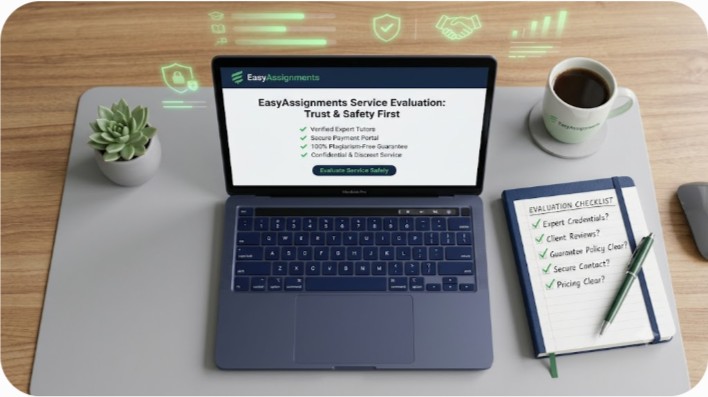
Watch for the opposite signals too. Guarantees that sound too perfect, refusal to discuss how the work is produced, pressure to pay immediately, or reviews that all read identically are reasons to slow down. A service confident in its quality has no reason to rush you.
Smart Alternatives Before You Outsource Everything
Sometimes the pressure that drives the "take my online course for me" search can be eased without handing over the whole course. Before you commit, it is worth running through a few options that keep more of the learning, and often more of your money, in your hands.
- Contact your instructor early: Many professors offer extensions or flexibility for students who reach out before falling behind, not after.
- Use your school's resources: Writing centers, tutoring labs, and academic advisors exist precisely for moments like this, and they are usually free.
- Adjust your course load: Dropping to part time or rearranging a schedule can turn an impossible term into a manageable one.
- Target help where it hurts most: Rather than outsourcing everything, get focused support on the single hardest component and handle the rest yourself.
- Build a realistic weekly plan: Sometimes the issue is structure, not ability, and a simple schedule with fixed study blocks solves more than expected.
Combining these with targeted professional support often works better than either alone. You keep the parts you can manage, get help on the parts you cannot, and come out the other side with both a grade and some understanding intact.
Making the Decision With a Clear Head
The choice to seek online course help is a personal one, shaped by your circumstances, your program's rules, and your goals. There is no shame in needing support during a hard stretch. What matters is going in with clear eyes: knowing why you need help, what kind will serve you, what the risks are, and how to pick a provider you can trust.
Approached that way, outside help becomes one tool among several rather than a desperate gamble. Used well, it can be the difference between an overwhelming semester that derails your plans and a difficult one you get through with your degree, and your peace of mind, still on track. If you want to talk through your specific situation, our team is ready to help you figure out the smartest next step.
Frequently Asked Questions
Is it worth paying someone to take my online course for me?
It depends entirely on your situation and what kind of help you choose. Targeted support on a genuinely difficult course or a time crisis can be worth it, especially when it keeps you engaged with the material. Handing over a course you could reasonably manage yourself, or one that later work depends on, is usually a poorer investment. Always weigh the value against your school's policies first.
Will my professor be able to tell I had help?
Quality varies enormously. Cheap services often produce work that reads inconsistently with your usual style or contains errors a specialist would avoid, which can raise questions. Responsible support that keeps your voice and involves you in reviewing the work is far less likely to feel out of place. This is one more reason quality matters more than price.
How much does online course help usually cost?
Pricing depends on the subject, the length of the course, the number of assignments, and how much support you need. This is why any serious provider asks about your specific course before quoting rather than offering a single flat rate for everything. A free, detailed quote is the honest starting point.
Is my information kept private?
With a reputable provider, yes. Confidentiality should be standard, covering your identity, your course details, and any information you share. If a service is vague about how it protects your data, treat that as a serious warning sign and look elsewhere.
Take the Pressure Off Your Online Course
Tell us where you are stuck and we will help you find the smartest, safest way forward. No pressure, just a clear plan and a free quote.