Is Online Assignment Help Actually Safe and Private?
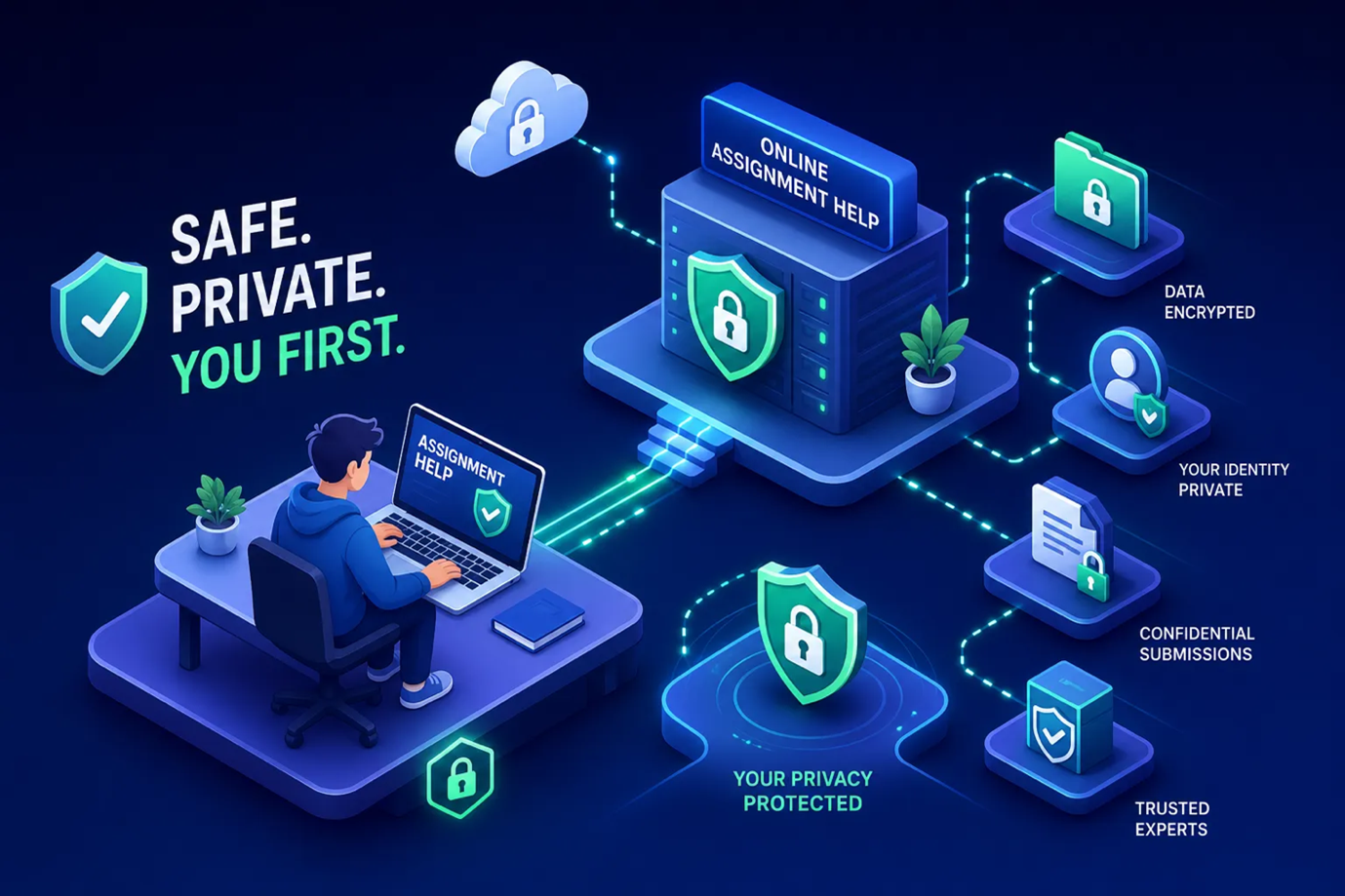
You found a service that looks legitimate clean site, fair pricing, a deadline that fits. Then you pause: will my school find out, and where does my data actually go? That hesitation is reasonable, and the answer depends entirely on which platform you choose.
This guide shows what real confidentiality looks like, the red flags that expose an unsafe service, and how to verify any platform's claims in under fifteen minutes.
What Confidentiality Actually Means
Confidentiality is not a tagline. It's a set of specific, verifiable commitments that a legitimate service either makes or doesn't. When a site claims to be "100% confidential," that phrase should be backed by a privacy policy that spells out four things: what personal data is collected (your name, email, and institution), how it is stored, who can access it, and under what conditions it is deleted. A real privacy policy grants users the right to erasure, meaning users can request that their records be removed. If those sections are missing or written in a single vague sentence, the gap isn't accidental.
Legitimate services also state explicitly that your data is never sold, rented, or shared with third parties under normal circumstances. Reputable platforms retain completed order details for a defined period typically three years for order records and up to seven years for financial records to meet tax compliance requirements and offer account anonymization or deletion upon request. That transparency is what separates a real confidentiality policy from a marketing placeholder.
Confidentiality covers the work itself, not just your personal details. A trustworthy service guarantees that every assignment is written from scratch, delivered exclusively to one student, and never entered into a shared database or resold. Some services scan completed papers in a way that avoids storing the document in the checker's public database preventing it from being flagged as "previously submitted" when your professor runs the same check.
Technical Security Measures That Protect Your Information
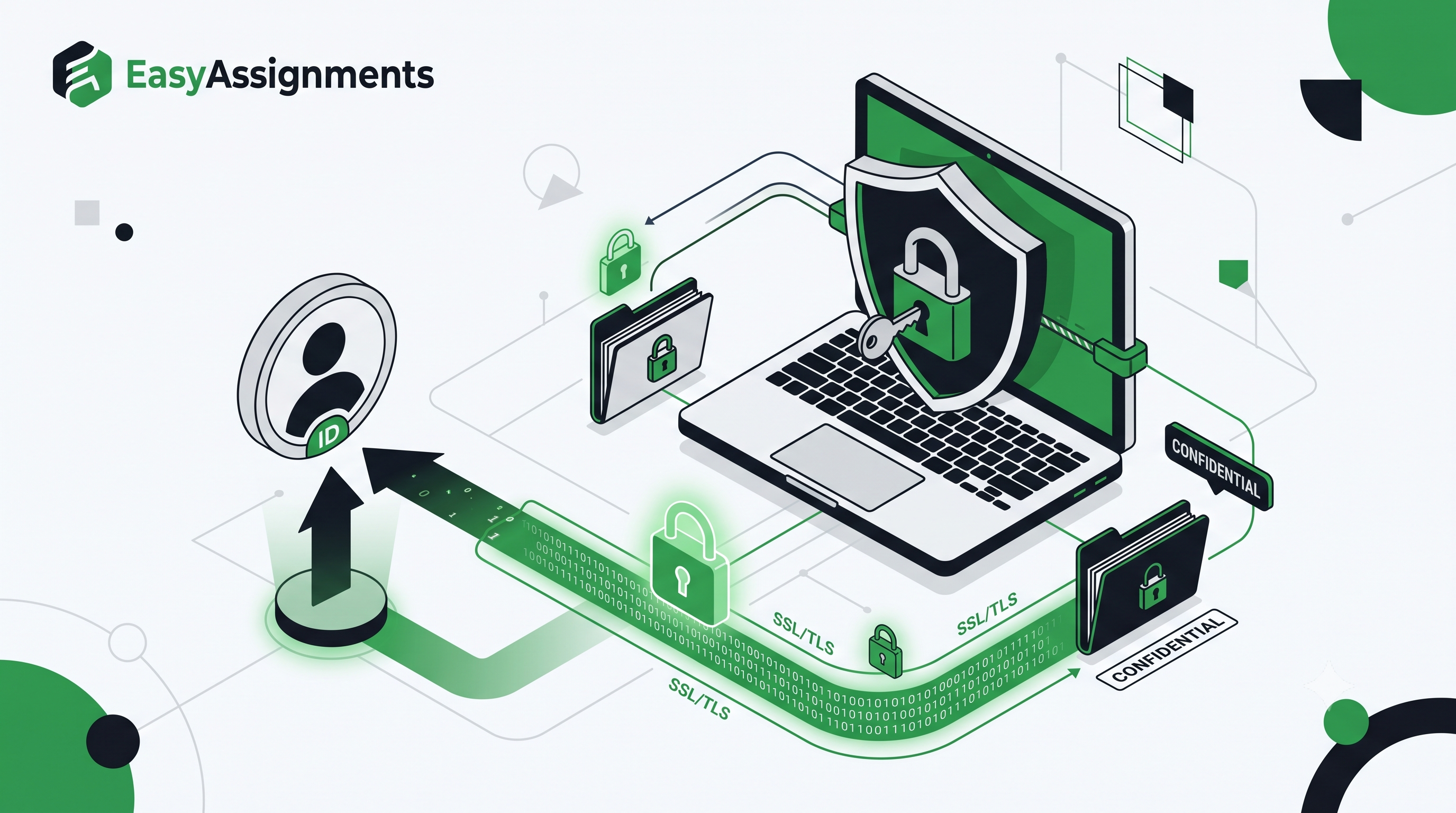
Policy language means nothing without the technical infrastructure to back it up. The first thing to verify before entering any personal or payment information is whether the site uses HTTPS. The "S" signals SSL/TLS encryption, which scrambles data in transit so your login credentials, personal details, and payment information cannot be intercepted. For configuration guidance, consult authoritative SSL/TLS deployment best practices, and to understand certificate-level threats see this overview of SSL/TLS certificate attacks.
Encryption Standards
The current recommended standard is TLS 1.3 with AEAD cipher suites such as AES-GCM or ChaCha20-Poly1305. Older protocols (SSL v2, SSL v3, TLS 1.0, and TLS 1.1) are deprecated and considered insecure. A site still running on those versions is not a safe place to enter payment information.
Payments
Legitimate platforms use PCI-compliant payment processors, meaning credit card data is handled by a certified third-party gateway, not stored on the assignment site's own servers. If a site accepts only untraceable methods such as cryptocurrency or gift cards, that is not a privacy feature it's a structure designed to prevent chargebacks and eliminate accountability if the service never delivers. For a plain-English primer, see this PCI compliance guide.
Anonymous IDs
Some services assign each student an anonymous ID within the platform's internal system rather than tying all activity to a real name and institution. With this approach, a database breach would not directly expose your identity or university affiliation. Before paying, ask the service whether orders are linked to real names or anonymous IDs any reputable provider will answer clearly.
| Security Layer | Safe Service | Unsafe Service |
|---|---|---|
| Connection | HTTPS with TLS 1.3 | HTTP or outdated TLS 1.0/1.1 |
| Payments | PCI-compliant gateway | Crypto / gift cards only |
| Identity | Anonymous student IDs | Real name tied to all activity |
| Privacy policy | Four clear sections + deletion rights | One vague sentence or missing |
| The work | From scratch, never resold | Recycled or shared database |
Red Flags That Expose Scam and Unsafe Services
A legitimate service has visible contact information: a working email address, a phone number, and ideally a physical address you can verify. It has reviews on independent platforms (Trustpilot, Sitejabber, Reddit's r/EssayServices) that include a realistic mix of positive and negative feedback. A wall of uniformly glowing five-star testimonials hosted only on the company's own homepage is not evidence of trustworthiness it's evidence the reviews aren't real. Genuine services accumulate mixed feedback over time because no service is perfect for every student in every situation.
Pricing below $8 per page is economically impossible for expert-written, original work. At that price point, students typically receive recycled content, work from unqualified writers, or nothing at all. Unrealistic guarantees especially a promise of a specific letter grade are a reliable signal of dishonesty. No service controls what grade a professor assigns, and any platform claiming otherwise is lying to close a sale.
Before paying, run two quick checks. First, look up the site's domain age through a WHOIS lookup. Scam operations frequently launch on domains less than six months old, while legitimate services typically have domains aged two or more years with a consistent review history. Second, confirm the payment gateway: check that the address bar shows a secure connection, verify a recognized processor name at checkout, and make sure the service is not requesting untraceable payment methods.
Red flag: Scam services use cryptocurrency and gift cards precisely because those transactions cannot be disputed or reversed. If the service vanishes after payment, the student has no recourse.
Not Sure a Service Is Safe?
EasyAssignments makes every verification step easy encrypted infrastructure, anonymous IDs, and a transparent privacy policy you can read before you order.
The Academic Integrity Risk and How Reputable Services Manage It
The concern students often avoid voicing directly is this: what happens if this gets flagged? Understanding how detection works helps frame what a reputable service's protections are really worth. In 2026, US universities primarily screen submissions through three systems: AI content detectors, plagiarism software, and writing-style fingerprinting tools. Turnitin remains the most widely deployed platform, but tools like Winston AI and GPTZero are increasingly used alongside it. Roughly 40% of four-year US colleges now use AI detection tools, with most integrating screening directly into LMS platforms like Canvas and Blackboard so scanning happens automatically on submission. For a deeper look, see this analysis on AI detection in academic settings, and check the platform's Academic Integrity Policy before ordering.
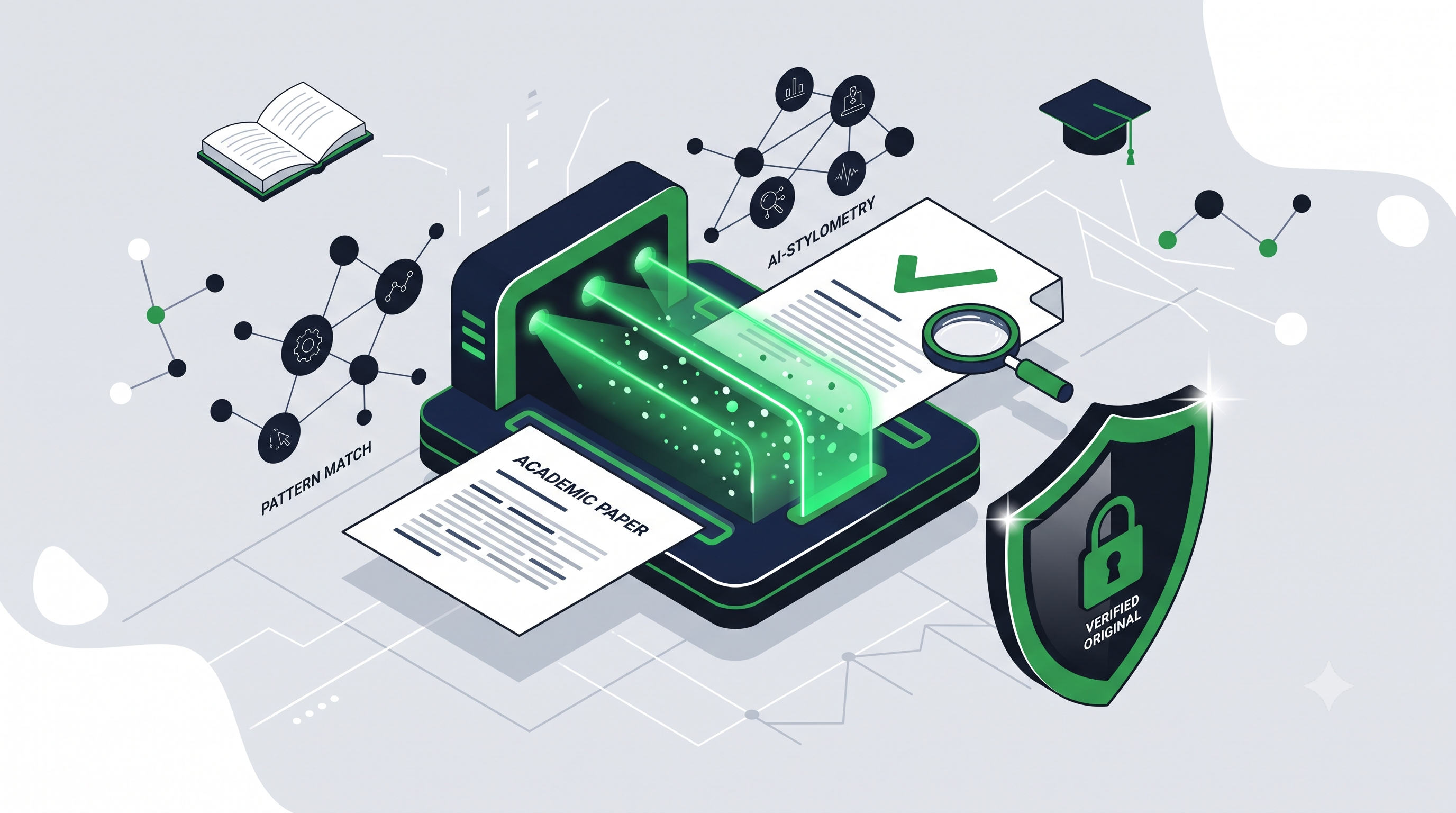
AI detectors analyze sentence-level statistical patterns to identify machine-generated text. Plagiarism tools cross-reference submissions against public databases and previously submitted student work. Style-fingerprinting goes further, comparing a paper against samples of the student's own writing on file to detect authorship inconsistencies. Detection systems have become significantly more precise, and the share of flagged cases involving outsourced assignments has grown alongside that improvement.
When a service states that assignments are written by credentialed human experts with no AI involvement, that is a risk-reduction claim as much as a quality claim. Research indicates AI-generated content often leaves detectable statistical traces that can persist even after editing, though accuracy varies and false positives occur. Human-written work produced by a subject-matter expert who tailors a paper to a specific prompt and rubric typically generates different statistical signatures. This is the practical reason services using qualified human writers and including AI-detection reports on delivery offer something meaningfully different from a chatbot dressed up as an assignment service.
How to Verify a Service Is Safe Before You Pay
Reading a privacy policy doesn't have to take long. Most students skip them because they look impenetrable, but the critical information appears in four specific sections: data collection, data sharing with third parties, data retention timelines, and user rights including the right to request deletion. If any of those sections are absent or written in one vague sentence, the service is not being transparent. A reputable platform can point you directly to the relevant clauses. Compare wording against a real example in our Privacy Policy.
Beyond the privacy policy, these five checks take under ten minutes and eliminate most unsafe platforms:
- Run a WHOIS lookup to confirm the domain is at least two years old.
- Search the service name on Trustpilot and Reddit for unprompted, mixed reviews not just the platform's own testimonials page.
- Send a pre-sale question to support and track the response time. Legitimate services usually respond within 24 hours.
- Confirm the payment gateway shows a recognized processor and a secure HTTPS connection; click the padlock to inspect the certificate.
- Verify there is no request for cryptocurrency or gift cards as the only payment options.
These steps don't require technical expertise. They require fifteen minutes and the willingness to walk away if the answers don't check out.
What a Genuinely Secure Assignment Service Looks Like
EasyAssignments runs on SSL-encrypted infrastructure, so all data transmitted between a student and the platform is secured in transit using current TLS standards. Students are assigned anonymous IDs rather than being identified by their real name within the order management system, separating personal identity from order history. The platform operates under a strict no-disclosure policy: no order details, student information, or institutional affiliation is shared with any third party.
Encryption
SSL/TLS-secured data in transit, end to end, on every page.
Anonymous IDs
Your identity stays separated from your order history.
No-Disclosure
Nothing about your order is shared with any third party.
Deletion on Request
Data retained only as needed, then erased when you ask.
Every assignment is written from scratch by a verified expert and delivered exclusively to the ordering student never entered into a resale database. Originality reports are included with delivery, and scanning is handled in a way that avoids storing the document in a public plagiarism database, preventing future flagging risk. After delivery, student data is retained only as required for account management and refunds, with deletion available on request.
Before You Hand Over Any Information, Check the Fundamentals
Confidentiality on an assignment platform is not a vague promise; it's a set of verifiable, specific features. SSL encryption, anonymous student IDs, a transparent privacy policy with data deletion rights, human-written work that passes AI detection, and a no-resell guarantee are the benchmarks a trustworthy service meets. Scam services cut corners on all of them, usually starting with the payment method and the privacy policy.
Before paying any platform, run the legitimacy checks outlined above and read the privacy policy for the four critical sections. Then confirm the payment gateway is traceable and reversible. If you follow these steps, you'll have a clear answer to whether that specific service's online assignment help is confidential and safe.
Services that take privacy seriously, EasyAssignments among them, make these verification steps easy because they have nothing to hide. The ones that resist direct questions, offer only untraceable payment methods, or publish vague one-paragraph privacy policies are the ones worth walking away from, regardless of how appealing the pricing looks.
Frequently Asked Questions
Is online assignment help confidential and safe?
It can be, but only on platforms with real safeguards: SSL/TLS encryption, anonymous student IDs, a transparent privacy policy with deletion rights, and a no-resell guarantee. Verify these before you pay rather than trusting a "100% confidential" banner.
Can my university find out I used a service?
A reputable service never shares your order details or institution with anyone. The bigger risk is detection of the work itself, which is why human-written, from-scratch papers with originality reports matter more than any single privacy claim.
What payment methods signal a scam?
Services that accept only cryptocurrency or gift cards are a disqualifying red flag, because those transactions can't be disputed or reversed. Safe platforms use PCI-compliant processors with traceable, reversible payments.
How do I check a service in under 15 minutes?
Run a WHOIS lookup for domain age, search independent reviews on Trustpilot and Reddit, message support and time the reply, inspect the payment gateway and padlock, and read the four key privacy-policy sections.
Privacy You Can Actually Verify
Encrypted infrastructure, anonymous student IDs, and a no-resell guarantee built in, not bolted on. See exactly how we handle your data before you order.