B Grade Guarantee for Assignments: Which Services Deliver?
You pay, an expert handles the work, and your grade is protected. That's the pitch. The reality is that most students don't read what "guaranteed" actually means until after they've submitted and received a disappointing grade, by which point refund eligibility has often already expired.
This is real money and a real GPA on the line. Understanding the terms before you pay is non-negotiable, so here's exactly how to tell a documented guarantee from a marketing claim.
What a B Grade Guarantee for Assignments Actually Promises
The phrase "B grade guarantee" circulates freely in assignment help marketing, but the substance behind it varies enormously. A genuine guarantee is a contractual commitment tied to verifiable conditions, not a headline on a landing page. There are two distinct uses of the term you'll encounter: contract grading, a professor-issued system where students earn a B by completing a defined set of tasks regardless of quality, and the service-level promise made by commercial platforms. This article focuses entirely on the latter.
How These Services Work in Practice
The general model works like this: you submit assignment details including the rubric, subject, and deadline; a matched subject-matter expert completes the work; and the delivered grade is compared against the guarantee threshold, typically a B or 80% and above. If the grade falls below that floor, a refund or revision process kicks in, depending on the service's terms. Commercial service guarantees are outcome-based, not completion-based. Reputable services document the guarantee in a published refund policy on their official website, not in a chat conversation that disappears after your order closes.
The Difference Between a Promise and a Documented Guarantee
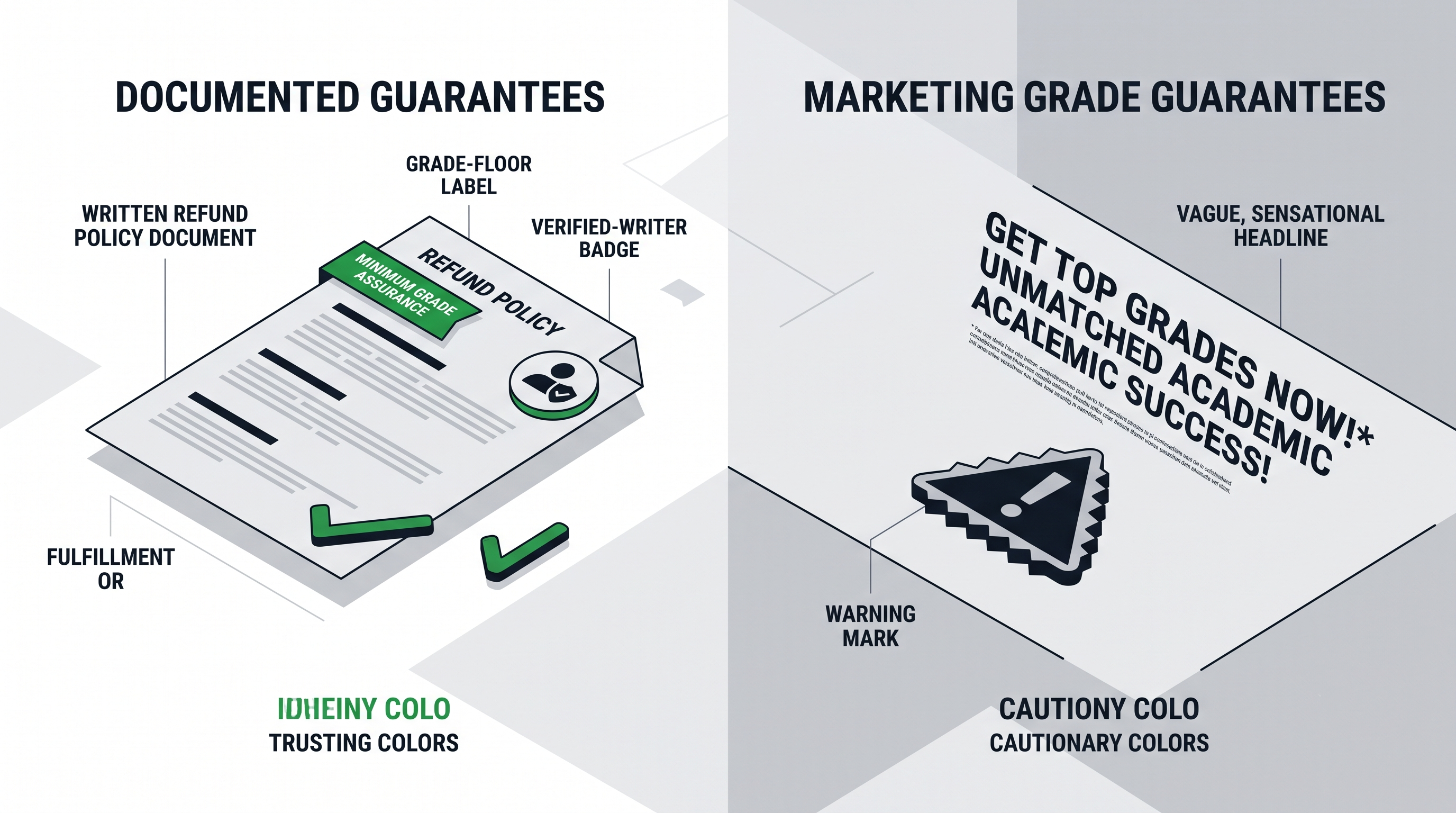
A verifiable guarantee with a B-or-better standard names the exact grade floor, specifies expert qualifications (PhD-level, subject-specific), and references a written refund or revision policy you can read before paying. The grade floor tells you what's actually protected. The expert qualification standard tells you who's accountable for achieving it. The written policy tells you what happens if they don't. Strip out any one of those three elements and what remains is a marketing claim, not a contractual commitment.
One critical signal: some services include disclaimer language stating they "do not guarantee academic outcomes" or that papers are "draft samples only, not to be submitted directly." If that language appears anywhere in the fine print, the B-or-better guarantee on the homepage is effectively void. Always locate the official refund policy URL before ordering.
Refund Conditions: The Fine Print Most Students Skip
The refund structure is where the real differences between services become clear. Many services follow recognizable patterns once you know what to look for, though terms vary meaningfully by provider. Reviewing these before you pay can save significant frustration later.
Full Refund Triggers: When You Get Everything Back
Many documented refund policies list the same core conditions that unlock a 100% refund: the delivered grade falls below the guaranteed floor, the work arrives late, or the plagiarism rate exceeds the specified threshold (commonly around 15%). These conditions should appear in the service's official written terms, not just in a chat promise from a support agent. Verbal assurances carry no enforceable weight if the refund policy doesn't back them up.
Partial Refunds and Time-Based Limitations
Most services use a tiered refund structure that erodes quickly with time. Once you submit the work to your institution, most services treat refund eligibility as void or severely limited, which is why timing your review window matters. Some services apply even stricter conditions for rush orders, offering refunds only if the work results in a failing grade rather than simply falling below a B. Read rush order terms separately, because they are often materially different.
| Refund Timing | Typical Outcome | What to Confirm |
|---|---|---|
| Grade below floor / late / high plagiarism | Up to 100% refund | Listed in the written policy, not just chat |
| First half of order period | Commonly up to 70% | Exact percentage in published terms |
| After the deadline | May be only ~50% | When the window actually closes |
| After institutional submission | Often void or limited | Whether any eligibility remains |
| Rush orders | Sometimes fail-grade only | Read rush terms separately |
What to Look For in the Terms Before You Pay
Before placing any order with a guaranteed-grade service, confirm three things. Does the guarantee appear in the official refund policy URL, not only a landing-page headline? Does the service describe its quality assurance or validation process in enough detail to be credible, because a service that can't explain how it checks work before delivery is unlikely to honor a refund claim? Are unlimited revisions included before the refund is even triggered, at no additional cost? Revisions are the first line of defense, and they shouldn't come with a surcharge.
A Guarantee You Can Actually Read
EasyAssignments backs its B-or-better standard with a published refund policy, PhD-verified subject-matched writers, plagiarism documentation, and unlimited free revisions before any refund is triggered.
How Top Grade Guarantee Services Compare
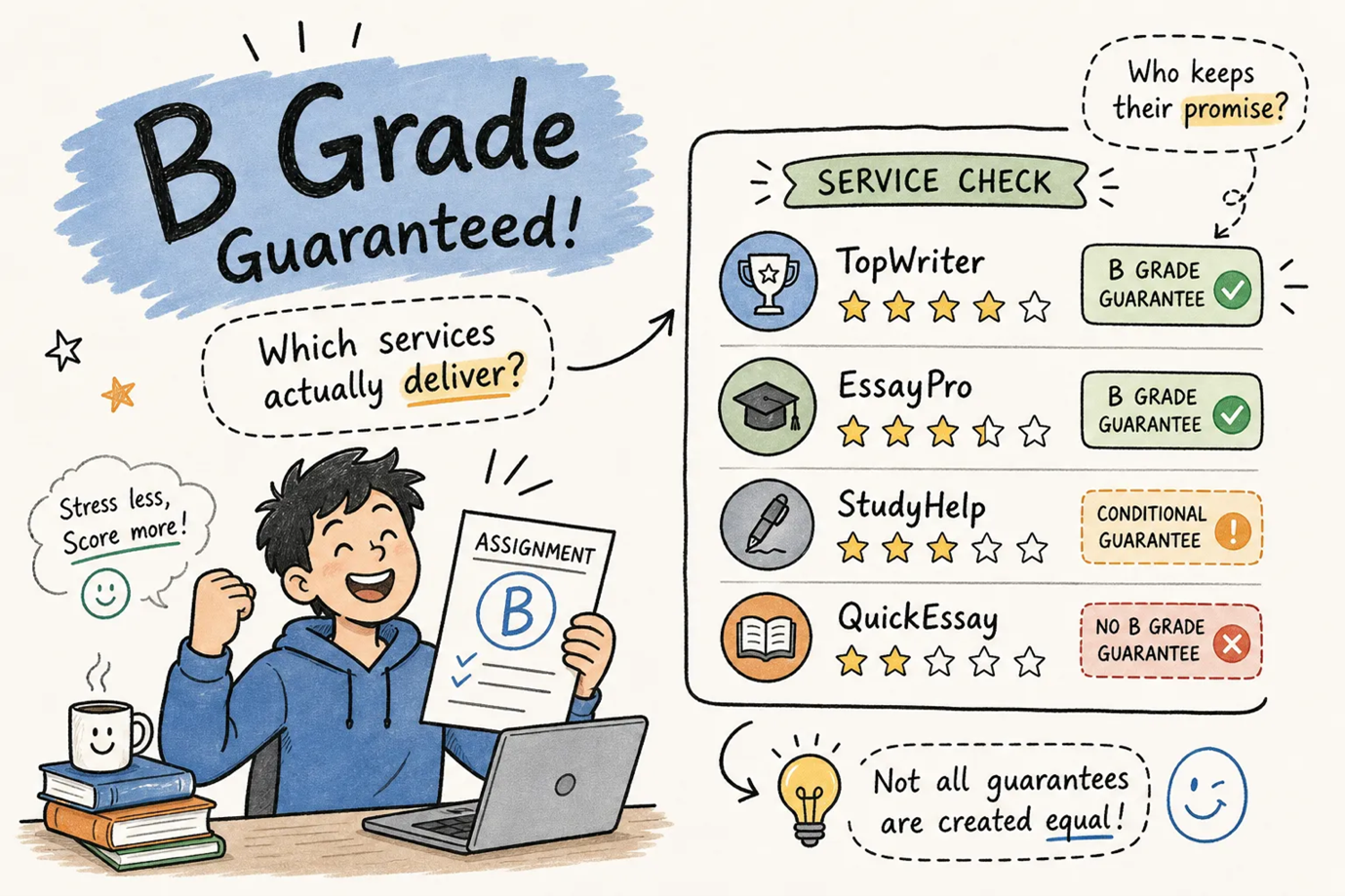
Not all services advertising a B-or-better guarantee back it with the same infrastructure. The difference between a service that delivers and one that doesn't comes down to four measurable factors: expert verification, plagiarism documentation, refund transparency, and revision rights.
What a Top-Tier Service Looks Like: The EasyAssignments Standard
EasyAssignments is built around the infrastructure that a credible guarantee requires. The platform connects students with PhD-level, subject-verified writers across a wide range of disciplines, with no outsourced work. Completed orders come with plagiarism documentation, and free unlimited revisions are included before the refund process is even considered. If a grade still falls below a B after revisions are exhausted, a full refund applies under the published policy.
Writer matching is subject-specific rather than generalist, which matters considerably for advanced coursework in fields like biochemistry, business law, or quantitative research methods. Orders are handled with secure, confidential processing, and the platform supports students working within common learning management systems. That combination of verified expertise, documented plagiarism protection, and a written refund policy is the standard every other service should be measured against.
Key Criteria for Evaluating Any Guarantee Service
When evaluating any service offering an A or B grade guarantee, four criteria matter most. Start with expert verification: are writers confirmed as PhD-level and matched by subject area, or are credentials claimed without any visible verification process? Then check plagiarism documentation: is a report provided with every order, or is "plagiarism-free" simply stated without proof? From there, examine refund transparency: is the policy written, publicly accessible, and specific about grade thresholds? Finally, confirm revision rights: are revisions free and unlimited before the refund kicks in? A service that meets all four is structurally capable of honoring its guarantee. One that meets only two or three is carrying risk it may ultimately pass back to you.
How Other Services Typically Fall Short
Common patterns in less reliable services include unverified or outsourced writers, grade guarantees that appear in marketing copy but collapse under disclaimer language in the actual terms, and tiered partial-refund structures that make full reimbursement nearly impossible. Many skip plagiarism documentation altogether, offering only an assertion rather than a report. It's also worth noting that platform ratings don't always reflect guarantee reliability. A service can maintain a strong aggregate score while accumulating a consistent pattern of denied refund complaints, so complaint volume and recurring themes matter more than any star rating.
Red Flags That Reveal a Weak or Fake Guarantee
Spotting a hollow guarantee before you pay is straightforward once you know what to look for. Most weak guarantees share a small set of common characteristics that appear consistently across unreliable services.
Warning Signs in the Terms and Service Claims
Four red flags should stop you from ordering: the word "guarantee" appears only in marketing copy, not in a linked refund policy with a verifiable URL; the fine print disclaims responsibility for "academic outcomes," contradicting the headline; refund eligibility expires the moment the deadline passes; and writers are called "experts" without any mention of a credential verification process.
No service can genuinely guarantee what a professor will assign as a final grade, because instructors retain full grading authority. Any service claiming 100% grade certainty without conditions is describing something that doesn't exist. The guarantee should promise to cover the outcome if the grade falls short, not to control the professor's decision. For context on how contract-based instructor policies operate, see an overview of contract grading schemes.
What Customer Reviews and Complaint Patterns Reveal
When reading reviews, complaint patterns matter more than overall scores. Look for recurring themes in negative reviews: denied refunds despite documented grade failures, promised revisions that never materialized, plagiarism reports that weren't provided, and support staff who went silent after payment. Services with clusters of positive reviews alongside a consistent pattern of refund-denial complaints deserve particular scrutiny. That combination suggests a service that performs adequately in easy cases but fails precisely when the guarantee needs to be exercised.
How to Get the Most Out of a Legitimate Guarantee Service
Choosing the right service is only the first step. How you structure your order and manage the revision process determines whether the guarantee ever needs to be used at all. A few practices upfront significantly reduce grade risk throughout.
Setting Up Your Order to Protect the Guarantee
Submit detailed instructions from the start: include the full rubric, grading criteria, required citation style, and any course-specific formatting guidelines. Vague instructions produce work that meets general academic standards but may miss course-specific requirements that professors weight heavily. Confirm that the assigned writer holds a verified credential in the subject area rather than a general writing background, particularly for technical subjects or upper-division coursework, and don't hesitate to ask the service how that verification is conducted.
Allow enough lead time to complete at least one revision round before your submission deadline. Services with 24/7 support let you clarify details mid-order, which significantly reduces the chance of a misalignment between what you expected and what was delivered. Deadline pressure is the most common reason students skip the revision window, and it's also the most common reason refund claims become complicated.
Using Revisions and the Refund Process the Right Way
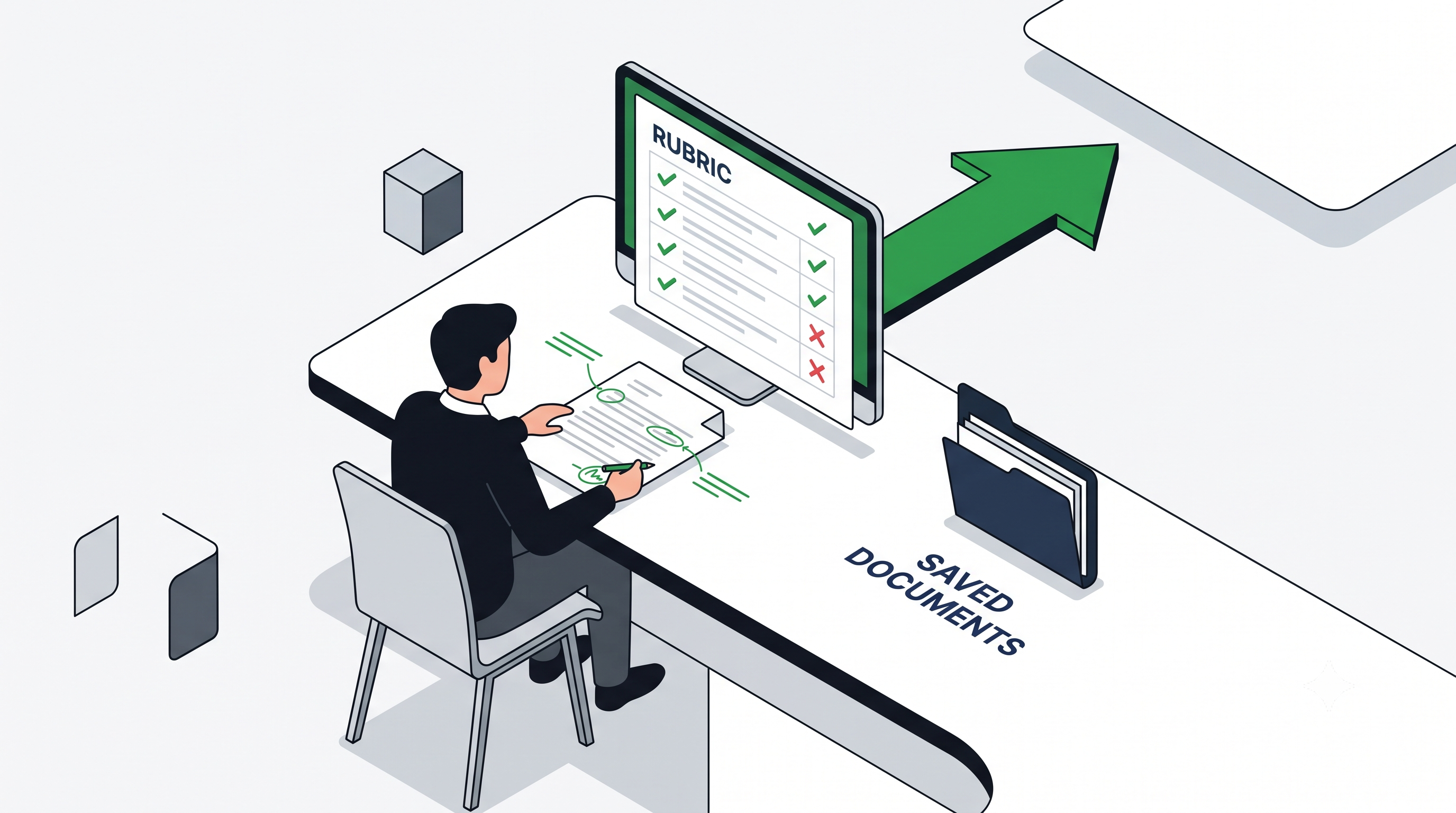
Unlimited free revisions are the first step in the process, not a fallback option. When you receive your completed assignment, review it against the rubric before submitting it to your institution. If anything doesn't align, submit a specific revision request with the grading criteria attached so the writer can target the exact areas that affect your grade. General feedback like "make it better" produces weaker revisions than feedback tied directly to the rubric.
If a grade still falls below a B after revisions, save all documentation: the original assignment, the delivered work, any revision correspondence, and the graded feedback from your professor. Refund requests backed by documented evidence move significantly faster, and services with legitimate policies process them without requiring you to argue the case repeatedly.
Choosing a Service You Can Actually Trust
A B grade guarantee is only as reliable as the terms written behind it. The service's expert verification model matters as much as the guarantee language itself, because a strong policy attached to unverified writers is still a weak guarantee in practice. Before committing to any service, evaluate it on these four criteria:
Written Refund Policy
Publicly accessible at a real URL, specific about grade thresholds.
Verified Credentials
PhD-level writers matched by subject, not vague "expert" claims.
Plagiarism Documentation
An actual report included with every single order.
Unlimited Revisions
Free and unlimited before any refund is triggered.
EasyAssignments meets all four criteria with a documented B-or-better grade guarantee, a published full refund policy, PhD-verified subject-matched writers, and revisions included at no additional cost. Review the EasyAssignments refund policy directly and hold every other service to the same documented standard. The guarantee is only worth paying for if the terms actually protect you when it matters.
Frequently Asked Questions
What does a B grade guarantee for assignments really mean?
For a commercial service, it's an outcome-based commitment: if the delivered grade falls below a B (often 80%), a documented refund or revision process applies. It only holds if that promise appears in a written refund policy, not just a homepage headline.
Can any service truly guarantee a grade?
No service controls what a professor assigns, since instructors keep full grading authority. A legitimate guarantee covers the outcome, a refund or revision, if the grade falls short. Any claim of 100% grade certainty with no conditions describes something that doesn't exist.
When does refund eligibility usually expire?
Most policies erode with time: full refunds for a grade below the floor, partial refunds mid-order, and little or nothing once you submit the work to your institution. Rush orders often have stricter terms. Time your review window before you submit anywhere.
How do I evaluate a guarantee before paying?
Check four things: a written refund policy at a real URL, PhD-level subject-matched writer verification, plagiarism documentation with every order, and unlimited free revisions before any refund. A service missing even one is passing risk back to you.
A Guarantee Is Only Worth It If the Terms Protect You
Hold every service to the same documented standard: a written refund policy, verified writers, plagiarism documentation, and unlimited free revisions. EasyAssignments is built to meet all four.